
View by Category:

Article Archive >
Legal Blog
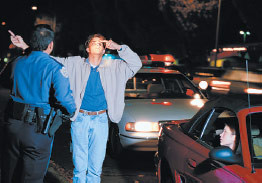
The ability to refuse a field sobriety test is allowed in most jurisdictions, although there may be consequences...
CA Intoxicated Driving FAQ
Intoxicated Driving FAQ
Santa Cruz and Monterey Criminal Defense Lawyer
Criminal & DUI Defense Attorney, John R. Coniglio - Tirelessly Pursues Justice for His Clients.
Driving while intoxicated (DWI), operating a vehicle under the influence (OVI), or driving under the influence (DUI) are all ways to describe the same thing: intoxicated driving. Intoxication may be the result of alcohol or another chemical substance (e.g., marijuana) or both. To be a criminal offense in Monterey, your blood alcohol content must be at or above the legal limit, you have an illegal chemical substance in your system, or your driving abilities were otherwise impaired.
In CA, there are many arrests made daily for intoxicated driving. Those arrested are often people like you and me: law-abiding citizens. At Law Offices of John R. Coniglio, our DUI defense lawyer works hard to help you beat a DUI charge or to, at a minimum, get the best possible outcome in your unique situation. Contact us at (831) 373-3151 to learn more about how we will help you. In the meantime, here are some of the most commonly asked questions we get from our clients when we first meet them about their intoxicated driving charge.
GENERAL INQUIRIES:
I got a DUI. What do I do next? Contact our office for a complimentary consultation. To better assist you in an evaluation of your case, please fill out a Case Evaluation Form which can be found on our website. You will receive a call as soon as possible.
Am I going to jail? Most likely, you were already booked and released soon after your arrest. It is the attorney's number one priority to keep you out of jail for misdemeanor offenses.
I just hit something/someone with my car. What do I do? Stay there and wait for law enforcement to arrive. Even if you were driving under the influence, a hit and run is a more severe charge than a simple DUI.
Is there any chance of getting the DUI reduced to a wet reckless charge? If your blood alcohol level was close to a 0.08%, there is a possibility that our forensic science expert can get that below a 0.08% at the time of driving.
I got a DUI and I am scheduled to travel to Canada soon. Is that going to be a problem? Canada, and some other countries, will not allow you into their country with a DUI conviction. We can recommend you to an excellent Canadian Travel attorney that can help you with travel requirements and solutions.
I missed my court date. What is going to happen? If you missed a court date and did not have any attorney representation, the court will most likely issue a Failure to Appear bench warrant. If this happens, contact our office. We can get bench warrants recalled and the arraignment/court date reset.
What is a bench warrant? A bench warrant is a specific type of warrant that a judge issues when a defendant fails to show up in court when required or otherwise violates the rules of court. It can function as an arrest warrant does, since the police can use a bench warrant to seize the defendant and bring them back to court. However, a judge starts the process of issuing a bench warrant, rather than a police officer.
I have a warrant. What do I do? Your attorney should be able to request a court date where they can recall the bench warrant and find out why the warrant was issued.
How long does a criminal case take? The complexity of a case will affect how long it takes. A simple misdemeanor might be resolved within a few weeks or a month, while a felony case might last for several months or a year. If the prosecution makes a reasonable plea offer early in the process, the case will end much sooner than if it goes to trial.
How many criminal cases go to trial? Very few criminal cases actually go to trial. The charges may be dismissed or dropped, or the defense may succeed in a pre-trial motion that essentially destroys the prosecution's case. Most often, however, the two sides will reach a plea bargain in which the defendant pleads guilty or no contest in exchange for a lesser charge or lighter sentence. Over 90 percent of all cases result in plea bargains.
Should I waive time? Sometimes the prosecution will ask the defendant to waive time, which involves waiving their right to proceed to a trial within the time required by state law. Defendants often are reluctant to waive their right to a speedy trial, but rushing to trial can be as problematic for the defense as it can be for the prosecution. You should probably heed the advice of your lawyer in deciding whether to waive time.
Do I need a lawyer even if the prosecution offers a standard plea bargain? Probably. Even if the prosecution offers a standard plea bargain for a certain type of crime, you should discuss your situation with a lawyer. Reports that the prosecution offers standard plea bargains may or may not be true, so you may want to benefit from an attorney's knowledge of the system. Also, you may not be right in assuming that you are guilty. An attorney may be able to identify a defense of which you may not have been aware. Retaining a lawyer may convince the prosecution to give you a better plea deal. At the very least, the attorney can help you make sure that you meet any conditions or requirements imposed by the court.
What is the difference between a felony and a misdemeanor?
In California there are two types of crimes. A felony is a crime which is punished as imprisonment in the state prison. A misdemeanor is a crime which is punished as imprisonment in the county jail not exceeding one year. In California many crimes are punished as either a felony or a misdemeanor. These types of crimes are called "wobblers." Depending upon the facts of a particular case, it is not uncommon to have the charges reduced from a felony to misdemeanor.
What If I have been charged with a Felony?
There are two processes in California when someone has been charged with a felony. One, which is rarely if ever used, is through grand jury indictment. The other is through the filing of a criminal Complaint. Once a Complaint is filed, you are brought to court and arraigned on the Complaint. You have the choice to enter a guilty or no contest plea, or a not guilty plea. You may also ask for more time to hire a criminal defense lawyer. If you enter a guilty or no contest plea, you will most likely be sent to probation for preparation of a pre-sentence investigation report. If you enter a not guilty plea, a preliminarily hearing will be set. A preliminary hearing is simply a check on the prosecutor's power to charge a person with a serious crime. At the preliminary hearing a judge sits as a magistrate and determines two issues:
(1) Was it more likely than not a crime was committed? and
(2) Was it more likely than not that it was the defendant who committed that crime?
This is a preliminary finding and is not the "beyond a reasonable doubt" standard needed to convict an accused. If there is sufficient evidence produced at the preliminary hearing, then the defendant is held to answer and a new document called an Information is filed. The defendant is then arraigned on the Information and a trial date is usually set. As you can read, a felony accusation is very serious.
What if I have been charged with a Misdemeanor?
A misdemeanor is still a very serious matter. Typically a Complaint is filed and you are notified of the arraignment date. At the arraignment, the charges are read to you and you have the choice of either entering a guilty or no contest plea, a not guilty plea or you can ask for more time to speak to a defense lawyer. At the arraignment a pretrial hearing may be set followed by a trial, if necessary.
Can I get the bail reduced or can i be released on my own recognizance?
- Everyone accused of a crime has the right to reasonable bail pursuant to the Eighth Amendment of the Constitution. The posting of bail is to reduce a flight risk and to ensure public safety. Bail is typically set according to the county bail schedule; however, depending on the facts of the case, a motion to reduce the bail or have the accused released on his own recognizance (O/R) may be appropriate. If you have questions regarding this procedure, please contact aMonterey criminal defense lawyer at our office.
Do I have to go to court?
- If you have been charged with a felony, you must personally appear in court. However, depending upon your circumstances the judge may allow you to execute a waiver of personal appearance pursuant to Penal Code section 977. This form must be executed in open court.
If you have been charged with a misdemeanor other than domestic violence, an attorney can appear for you. You never have to go to court if you do not want to.
Do I really need a lawyer?
- Hiring a good criminal defense lawyer is always to your advantage. Remember, the district attorney is a lawyer. Having a defense lawyer on your side who is looking out for you is the safest way to make sure that you are treated fairly in this whole process that you are in the middle of; be careful. There are a lot of slick sales people out there who will take your hard-earned money and then immediately plead you guilty. You need a criminal attorney who is experienced and who will actually fight for you. You need a lawyer who has access to private investigators and independent experts who will fully investigate your case.
Will the lawyer personally handle your case?
- You will also need a lawyer who will personally work on your case. There are a lot of big city lawyers who advertise that they can represent you. Most of these lawyers refer the case out to another criminal attorney who goes to court and you will never really know who is handling your case. Again, make sure that the criminal defense lawyer you hire will personally handle every aspect of your case. You and your case deserve a lawyer who will provide the highest level of professional service.
- You also need a criminal lawyer who is known by the prosecutors, the judges, and the court clerks. A good local lawyer will make sure that your case does not get assigned to a particular judge that may punish you more severely than other judges. An out-of-town lawyer will not know which judges to avoid.
Will the lawyer keep out illegally seized evidence?
- You have Constitutional rights. If you have been arrested and the evidence has been seized in violation of your Constitutional rights, your attorney can ask the court to exclude this evidence. It is important to ask the attorney if he or she routinely makes these motions pursuant to California Penal Code section 1538.5. You and your case deserve a criminal defense attorney who actually understands the law in this area. A good way to find out is to ask the attorney if he or she has ever done appellate work with regard to search and seizure law.
Will the lawyer represent me for the entire case?
- Most lawyers only represent their clients through the conclusion of the criminal proceedings. After conviction, your case may have many confusing and time-consuming aspects, ranging from enrolling in court mandated programs, enrolling in a work alternative program, home confinement, or formal probation. You should hire a lawyer who will handle the entire case. You and your case deserve a criminal defense lawyer who will help you through the entire process from beginning until the end.
Will the lawyer evaluate my case for free and tell me truth about my case?
- It is unethical for an attorney to guarantee the outcome of a case. If your lawyer promises you a specific result, then he or she is behaving unethically and you should find another criminal lawyer to represent you. Most attorneys will offer you a free consultation or evaluation of your case. You should take them up on it. Do not feel pressured to hire them if you do not want to. Bottom line: You should at least consult with a criminal attorney before your first court appearance.
Will the lawyer take payments or credit cards?
- In today's society, even lawyers take payment plans and credit cards. Ask the lawyer if he or she takes payments or credit cards. Lawyers are expensive. You should find a lawyer who will work with you regarding the manner of payment. Remember, you also get what you pay for.
Can i participate in a drug treatment program?
- Depending on the facts of your case, you may be eligible to participate in the following programs:
• Deferred Entry of Judgment
o If you complete the program the entire case could be dismissed
• Proposition 36
• Drug Court
- If you have questions regarding your drug case, please contact our qualified criminal defense lawyer.
What if I have been charged with domestic violence?
- If you have been charged with a crime involving domestic violence, you need to consult a domestic violence law defense attorney who is experienced in:
• Contesting criminal protective orders
• Contesting move out orders
• Contesting restraining orders
• Contesting prior "bad acts"
Will I go to jail or prison?
- That is always the most difficult question to answer. However, depending on the facts of your case and your particular background (i.e. first criminal offense vs. violation of parole) you may be able to participate in programs such as:
• Alcohol or drug rehabilitation programs
o Our firm has referred many clients to these types of programs and our clients have received credit against their jail sentences
• Work Alternative/ Community Service
• Electronic Monitoring/ House Arrest
o You would be allowed to go to work
What is "blood alcohol content" level?
Blood alcohol content (BAC) is a measurement of the amount of alcohol found in the blood expressed as a percentage. It is calculated in grams per 210 liters of breath, and a BAC of 0.08 means there is 0.08% alcohol by volume. Measuring BAC is a way for law enforcement to calculate the amount of alcohol someone has had and their ability to drive a motor vehicle.
What are my rights during DUI traffic stops?
If you are pulled over due to suspicion of drunk driving or pulled over for a traffic stop and then the police officer suspects intoxicated driving, you should remember you have certain rights as a U.S. citizen. Namely,
- The driver and any passengers have the right to remain silent (except you must show the police your driver's license, registration, and proof of insurance upon request); and
- If you are a passenger, you are free to leave.
If you are arrested or detained, you have additional rights, including Miranda warnings.
- You can say you wish to remain silent and ask for a lawyer immediately.
- You have the right to make a local phone call.
If you believe your rights were violated in any way, try to write down everything you remember, including the police officer's agency (state police, county police, etc.), badge number, and patrol car number.
Can I refuse a breathalyzer test in Monterey?
You can refuse a breathalyzer test. These are portable instruments police have with them to test your breath for alcohol. The results of these tests are typically not admissible if you are, in fact, arrested and charged with an intoxicated driving offense.
Refusal, however, carries with it significant consequences. Those consequences depend on your jurisdiction, but you can expect any of the following:
- Your license may be suspended.
- You may be sentenced to jail time.
- You may still face a DUI charge based on other criteria, such as field sobriety test results, witness testimony, and the police officer's observations.
- You may be fined.
Also, if you refuse, the police officer may request a warrant to take a blood sample. Blood tests are more reliable than breath tests, and they can be more challenging to defend against if a case is filed against you.
What are standardized field sobriety tests (FSTs)?
Standardized field sobriety tests (FSTs) are tests approved by the National Highway Traffic Safety Administration (NHTSA). These tests are allegedly designed to help police determine whether a driver is intoxicated or not.
There are three standardized FSTs:
- the Horizontal Gaze Nystagmus Test (HGN test)
- the One-Leg Stand Test (OLS test)
- the Walk-and-Turn Test
The results of these tests may be used as evidence against you in an intoxicated driving case. Non-standardized tests, on the other hand, are not validated by NHTSA and are typically not admissible as evidence.
Non-standardized FSTs include:
- finger to nose test
- the finger count test
- the hand pat test
- the alphabet test
- the reverse counting test
- the coin pickup test
Can I refuse field sobriety tests in CA?
The ability to refuse a field sobriety test is allowed in most jurisdictions, although there may be consequences, such as being asked to complete a breathalyzer test or provide a blood sample. A refusal to complete a field sobriety test typically does not carry the same serious repercussions as refusing a breathalyzer test.
After a DUI arrest in CA, will my driver's license be suspended or revoked?
There are two different types of suspensions. The first is an administrative suspension, and many jurisdictions will suspend your license if you refuse a breathalyzer or have a BAC over a certain level. This means you can lose your driving privileges even when you have not been found guilty of driving while intoxicated or under the influence of a chemical substance.
The other type of suspension occurs when you are convicted of an intoxicated driving offense. Whether your driver's license will be suspended or revoked depends on your jurisdiction, your BAC level, and whether this is your first offense.
What happens after a drunk driving arrest in Monterey?
If you are arrested for drunk driving, what happens next depends on the facts and circumstances. It's important to know that DUI arrests result in two processes after an arrest: (1) the administrative hearing, which results in civil penalties, like driver's license suspension; and (2) the criminal process, which can result in a conviction in the absence of a strong DUI defense. A conviction can lead to fines, driver's license suspension/revocation, imprisonment, ignition interlock device (IID) installation, and other penalties.
Can I still get auto insurance in Monterey after a drunk driving conviction?
Your ability to obtain or maintain auto insurance after a drunk driving conviction depends on whether it was your first conviction. You will likely find insurance after a first conviction, although your rates will increase significantly.
Note, however, that even if you have been convicted of only one drunk driving offense, you may still be required to obtain SR-22 insurance. SR-22 is a certificate of financial responsibility required by either your jurisdiction or a court order. This form is not insurance, but rather proof that your auto insurance policy meets the minimum liability coverage required by state law. A fee, which ranges from $300 to $800 on average, is most often charged to file this form.
Can I beat a drunk driving charge in CA?
It is possible to beat a drunk driving charge, although it is not typically an easy process. It will require a thorough understanding of the law and a thorough understanding of the technical nature of field sobriety tests, breath tests, blood tests, and urine tests. Understanding the latter tests is critical to identifying errors (technical or human-made errors) to highlight the unreliability of the results.
Aside from errors or unreliable test results, an alleged DUI offender may have had their constitutional rights violated. This happens more often than you might imagine. A violation can lead to the inadmissibility of some or all evidence. Without sufficient evidence, the case will be dismissed, or a jury may return with an acquittal.
You will need a drunk driving defense attorney to help you beat an intoxicated driving charge. These cases can be highly technical, as much as legally complex.
Can I just plead guilty to drunk driving?
An arraignment is a hearing where the defendant can plead guilty, no contest, or not guilty. You can plead guilty, but the real question is whether you should or not. It would be a mistake to plead guilty at this time, especially without the counsel of a drunk driving lawyer in Monterey, and there are multiple reasons for this.
- If you plead guilty immediately, you lose any opportunity to fight the DUI charge.
- If you plead guilty immediately, you also lose any opportunity for a plea deal, if that is what would be best in your unique circumstances. Admittedly, a plea deal means you would plead guilty, but the process can render a better outcome than an immediate plea of guilty. In some jurisdictions, you may be able to plead down to a lesser offense.
- The sentencing is often harsher when given in response to a plea of guilty during the arraignment, as opposed to what a plea deal would entail or a sentencing after a conviction would impose. The reason is simple: you have time to mitigate and negotiate.
If it's your first drunk driving charge, it can be tempting to plead guilty right away so that you can get the case over faster and get on with your life. But if you do not fight to get the charge dismissed or to get yourself acquitted, it will be your first drunk driving charge. With the latter on your record, you want to keep in mind that subsequent DUI convictions will assuredly lead to harsher penalties.
Do I need a drunk driving lawyer in CA to win my DUI case?
If you plan to fight your drunk driving charges, it is in your best interest to have an attorney represent you. The law can be complex. The evidence can be highly technical and scientific. Police and state expert testimony can be damaging. All these things can lead to a conviction, unless you have the necessary skills and knowledge to successfully counter them. Most alleged DUI offenders do not have that kind of knowledge and skills.
How Much Does a DUI Defense Lawyer Cost?
There are a lot of factors to consider when determining the cost of a defense lawyer, like:
- The experience of the lawyer
- Whether you take a plea deal
- Whether you go to trial
- The costs of the experts if you go to trial
- More
It also depends on whether the attorney charges by the hour or a flat rate. You can expect to pay up to $5,000 or more if the case is appealed. The more experienced lawyers will cost more, but they can save you more in the long wrong in terms of auto insurance and lost wages.
Contact a DUI Defense Attorney in Monterey Today
At Law Offices of John R. Coniglio, we know the law and the technical, scientific make-up of field sobriety tests, blood tests, breath tests, and urine tests. We also know how to identify and proactively address any constitutional rights violations to benefit your case.
Additionally, our firm has access to private companies who can set up electronic monitoring if necessary. If you are concerned about your liberty, contact us today by selecting one of the case evaluation links to provide information about your case so that we can reply as soon as possible: